Behind the build
How This Site Is Built
How this site is built matters as much as what it says. Most agencies that sell websites show you a portfolio of client work — this page is different, because it's not a client's site, it's mine. No deadline pressure from someone else's launch date, no budget ceiling I didn't set myself, no legacy decisions inherited from whoever left before me. Every choice on this site — the architecture, the animations, the way search works, the way the vote widget on the newsletter page remembers you changed your mind — is a decision I made and can defend. If this is what I build with nothing holding me back, it's also the most honest preview of what I'd build for you.
See the architecture- 0JS frameworks
- 100%native CSS, zero framework
- 8+custom-built interactive systems, zero from a marketplace
- 18+years of judgment behind every call
No Template. No Page Builder. No Plugins.
WordPress + themePage builder pluginBloated admin panel
This isn't WordPress with a theme bolted on. It's not Webflow, Wix, or a site-builder with the branding swapped out. There's no page-builder plugin stitching sections together, no bloated admin panel loading libraries nobody uses, no "page speed" plugin trying to undo the damage the other plugins caused. The whole site runs on AI-assisted code, directed by expert-level human engineering, talking to a lightweight embedded database — the kind of stack most agencies call "too much work" and most clients never get offered.
Native CSS, Not a Framework
:has()@propertylight-dark()@starting-style
Every animation here — the scroll-drawn line connecting the process steps, the liquid-glass card surfaces, the light and dark theme that remembers your choice and never flashes the wrong one on load, the 3D card tilt that follows your cursor — is written in plain, modern CSS — AI-assisted in execution, directed line by line by expert-level human engineering judgment. No utility-class framework shipping ninety percent unused code. No component library imposing its own design opinions you then have to fight. The command palette you can open with Ctrl+K, the search that finds a page no matter what order you type the words in, the topic-vote widget on the newsletter page — all built from scratch for this site, not pulled from a marketplace.
An Operator-Steered Build
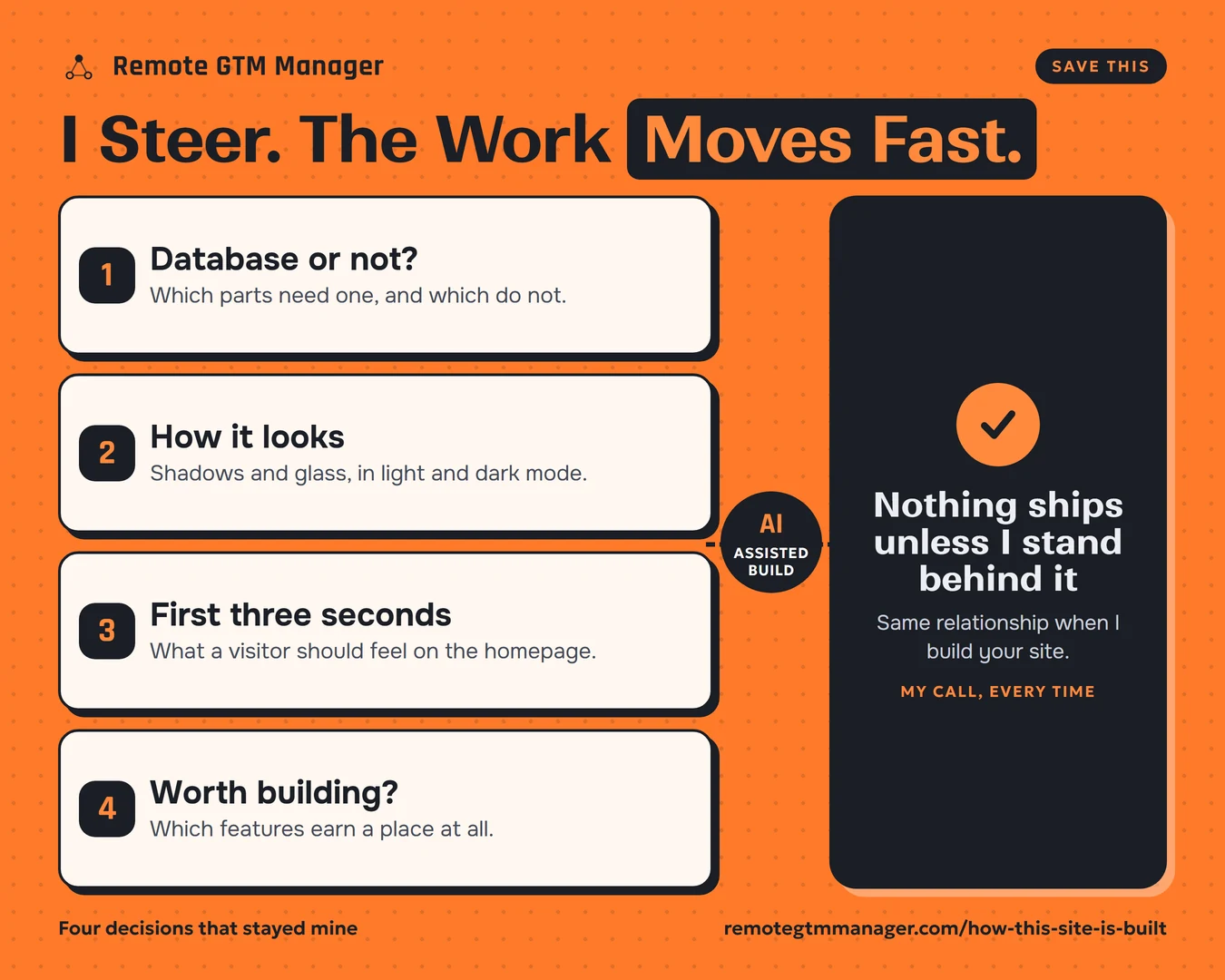
I didn't write every line of this by hand, and I'm not going to pretend otherwise — but I also didn't hand the build over to anyone and walk away. Every real decision — which parts of the site needed a database and which didn't, how the design system's shadows and glass surfaces should look across light and dark mode, what a visitor should feel in the first three seconds of the homepage, which features were worth building at all — was mine. The execution moved fast because modern tools move fast. The judgment behind every choice, the thing that actually determines whether a website works, stayed exactly where it should: with the person who understands the business it has to serve. That's the same relationship you get when I build your site — I steer, the work moves quickly, but nothing ships that I haven't personally stood behind.
What That Actually Buys You
A site built this way doesn't carry someone else's technical debt. There's no plugin update that breaks your layout overnight, no page-builder abandoning its own format in two years, no mystery dependency with a security hole nobody's patching. What you get instead is a site that loads fast because there's nothing slowing it down, that looks the way it looks because someone chose it to, and that can change the moment your business changes — not whenever a vendor's roadmap gets around to it.
- Loads fast — nothing slowing it down
- No plugin can break it overnight
- Changes the moment your business does
The Stack, Layer by Layer
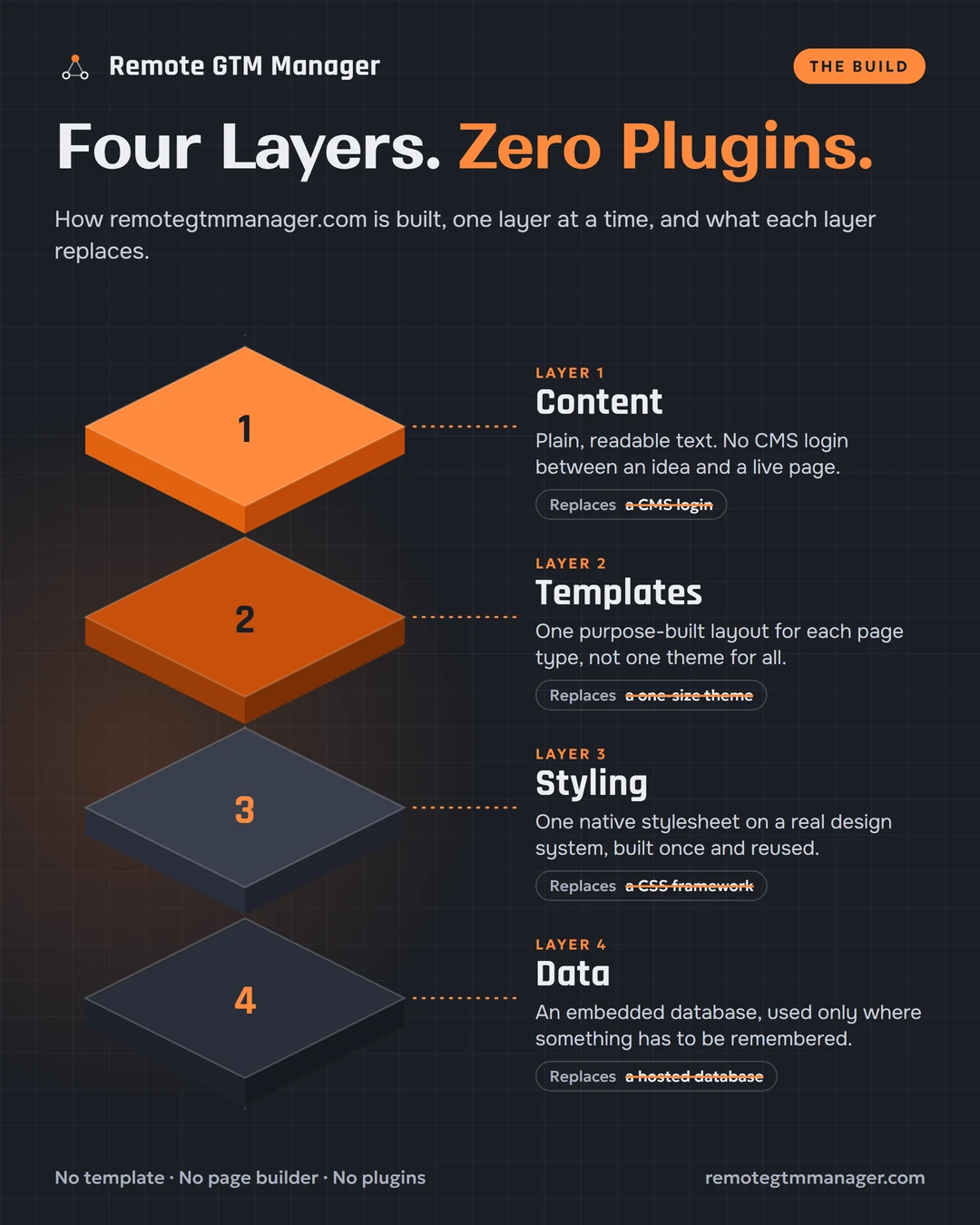
-
1
Content.
Every page starts as plain, readable text — no database required to edit a sentence, no CMS login standing between an idea and the page going live.
-
2
Templates.
Each page type has its own purpose-built layout — a service page isn't forced into the same mold as a guide or a legal page just because one template was "good enough."
-
3
Styling.
One native stylesheet, no framework, with a real design system underneath it — consistent shadows, consistent spacing, consistent motion, built once and reused everywhere instead of improvised page by page.
-
4
Data.
An embedded database handles the parts that actually need to remember something — a vote, a reaction, a search index — without the cost or complexity of a separate hosted database service most small sites will never fully use.
If This Is What I Build for Myself
I have no deadline I'm racing, no client budget capping what's "worth it," and no one else's brand guidelines to follow here — and AI-assisted execution, directed by expert-level human engineering, is still what came out of it. Imagine what happens when that same standard is pointed at your business instead of mine.
If this is what I build for myself, imagine what I'd build for you.
Free Zoom session. No pitch, no pressure — just the person who'd do the work.
Book a Free Strategy Call → Join the Newsletter
Free Zoom call · No pitch, no pressure · No form to fill out first · 7,038+ subscribers and counting